
Biomass converted to fuel and food
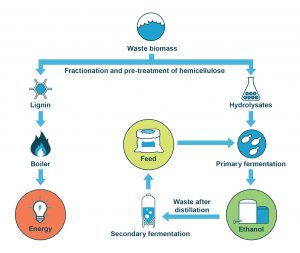
Second-generation (2G), or 2nd generation biofuels, are produced from the non-food portions of plants, enabling fuel production without competing with food supply. However, these feedstocks create challenging fermentation conditions that conventional yeast strains struggle to tolerate.
MicroBioGen has developed an optimised yeast designed to perform under these conditions, supporting efficient conversion of lignocellulosic biomass into bioethanol.
A key advantage of this platform is that the yeast can be cultivated using process side streams, enabling the co-production of renewable fuel and a high-protein biomass suitable for food or feed applications from the same non-food input.
This yeast biocatalyst was developed in collaboration with Novonesis (formerly Novozymes), supported in part by the Australian Renewable Energy Agency (ARENA), as part of an A$8 million project completed in 2021.
More information:
- Press Release
- Knowledge Sharing Report
- Lifecycle Analysis (an independent, peer-reviewed LCA report by Life Cycle Strategies)
- Market Analysis (an independent report by Energy Link Services)
Download Fact Sheet
Commonwealth Government funding through the Second-Generation Biofuels Research and Development Grant Program supported this project.